Case Study: Lithium Support Communities UX
After the Dot Com crash, Gamers.com had to shift its business. As online advertising was still an unproven and unviable means of sustaining investor confidence, we found that we could transform a growing piece of our technology into to a new business model. Lithium was founded on the backbone of an existing product, Gamers.com Community Forums. Dell was already licensing our software for their Support Forums, and it was transforming their Customer Support Systems. To build Lithium, we needed to transform a general community forums workflow to one which provided peer-to-peer customer support for large B2C companies like Dell, Sony PlayStation, and AT&T.

Goals & Objectives
Using existing backend software originally created for gamer communities, I needed to create a workflow that would allow users to help answer other users questions and issues given that many consumer products and services have similar problems. In making peer-to-peer support simple and accessible, companies could reduce call-center activity and costs by creating an active customer-supported community that helped resolve common issues.
Audience & Research
Having worked on building successful community forums at Gamers.com, my team and I learned a lot about online users and product support for games and gaming hardware. As we looked toward transforming our product into a new business focused on bringing ROI to enterprises by reducing call-center costs, we identified the following users:
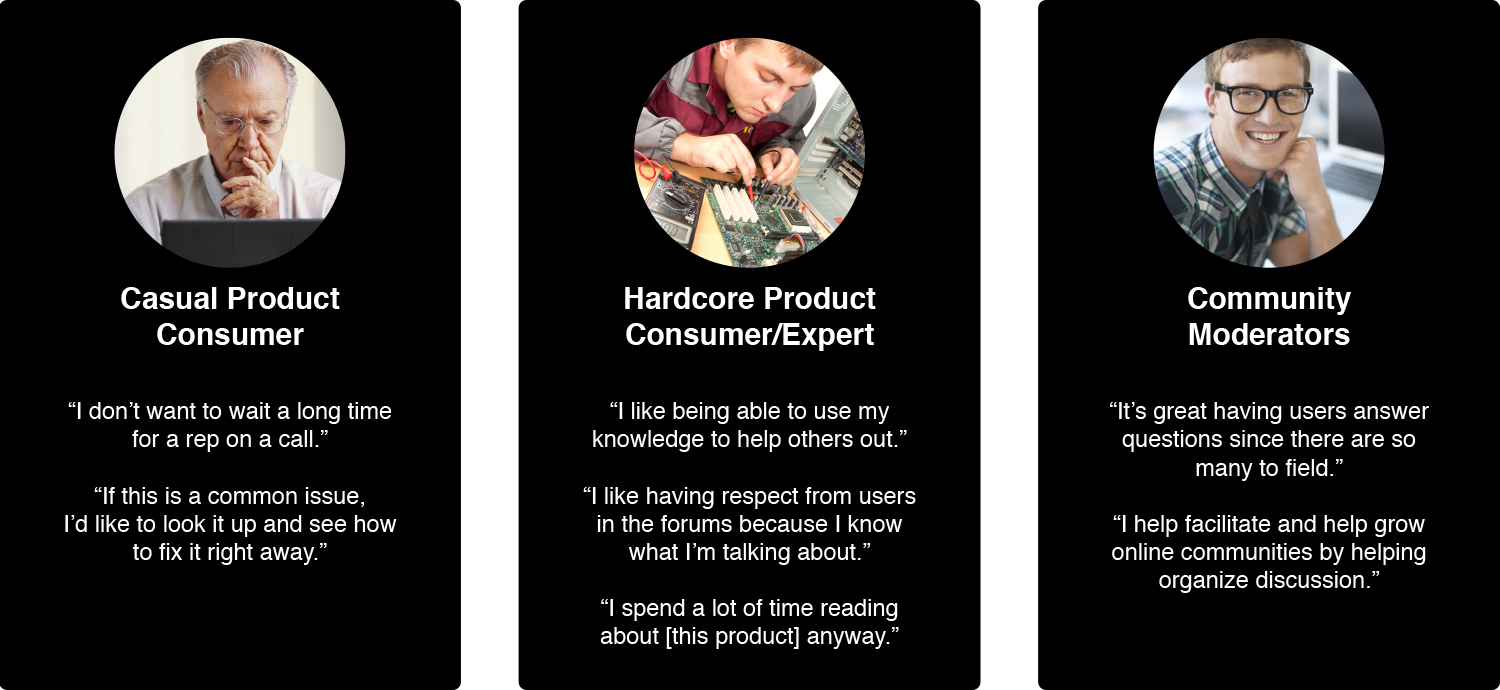
- Casual Product Consumer: A consumer of a company's products or services, that has run into an issue or problem. They prefer to not wait on a phone call to explain their problems. They want to go online and search to find a resolution to their issue quickly.
- Hardcore Product Consumer/Expert: A category enthusiast and consumer of a company's products or services, that is also a strong advocate for the company and is willing to use his/her knowledge and expertise to help other users as well as evangelize in support of the company. They enjoy the feeling of being knowledgeable and receiving accolades from other peers.
- Community Moderators: A trained administrative member of Lithium on behalf of the company, who professionally engages with users on their support forums and can moderate users and discussion. The moderator can also mark a post as the known solution to an issue to expedite resolution.
Casual Product Consumers want to spend as little time as possible solving their issues. They would like to quickly search online or navigate to a discussion where they can add information to the issue to get a resolution. If they can't find the issue, they want to tell what their problem is and have someone help them out. We found that the Hardcore Product Consumers tended to spend a lot of time on the forums (out of interest and brand loyalty), browsing through questions and trying to help field them using their extensive knowledge and expertise (much like users on Quora today). Throughout the site, we could position questions for them to answer as well. They relished in developing an online reputation for helping out and exercising their knowledge to solve problems.
Prototypes
Since we had an existing product, which was designed to enable user-generated social interactions via threaded conversations and posted topics, we had to revise the workflow to allow for a more directed purpose of allowing posters to get their queries answered.

Design & Iteration
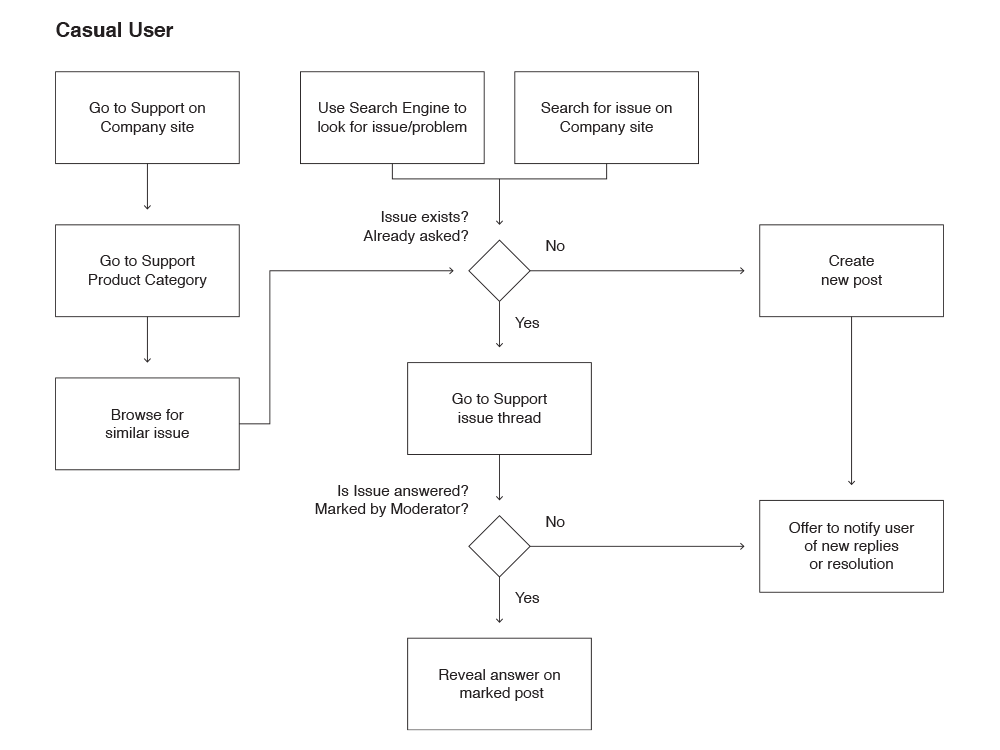
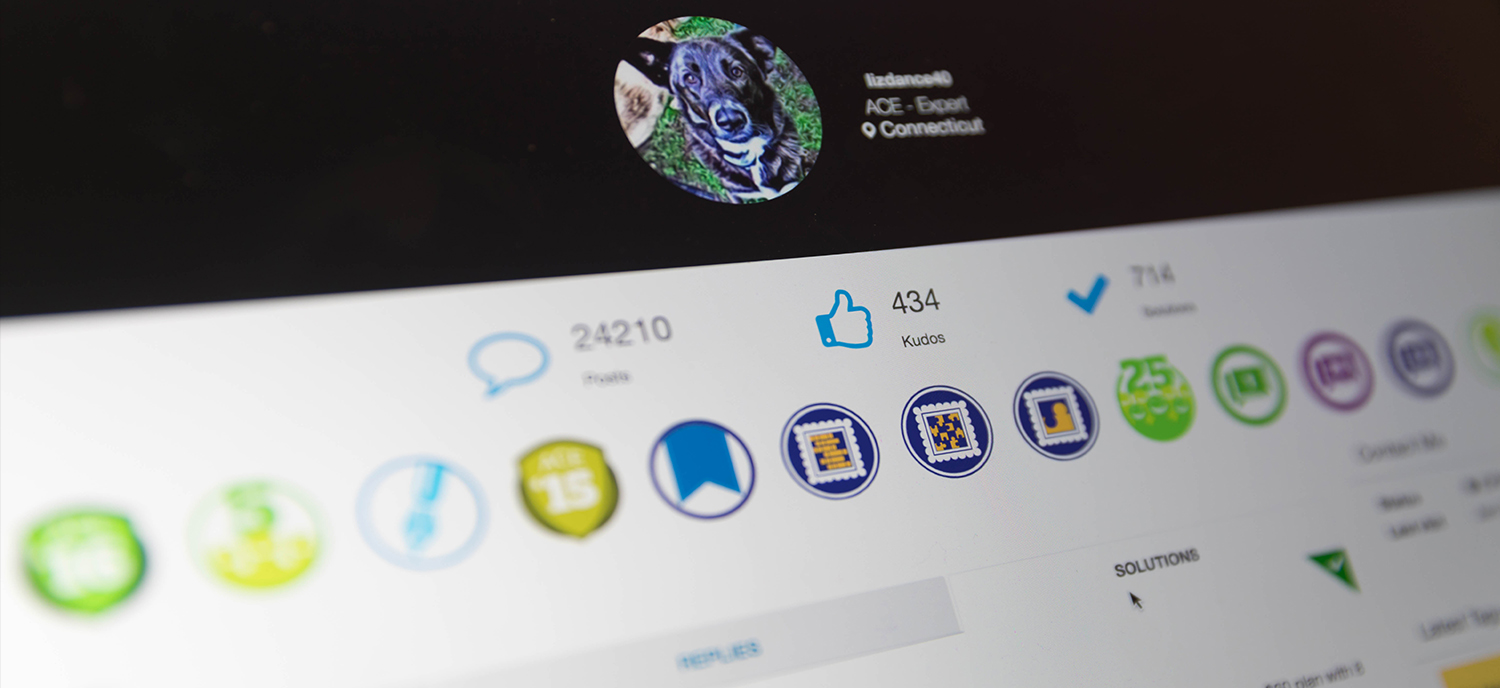
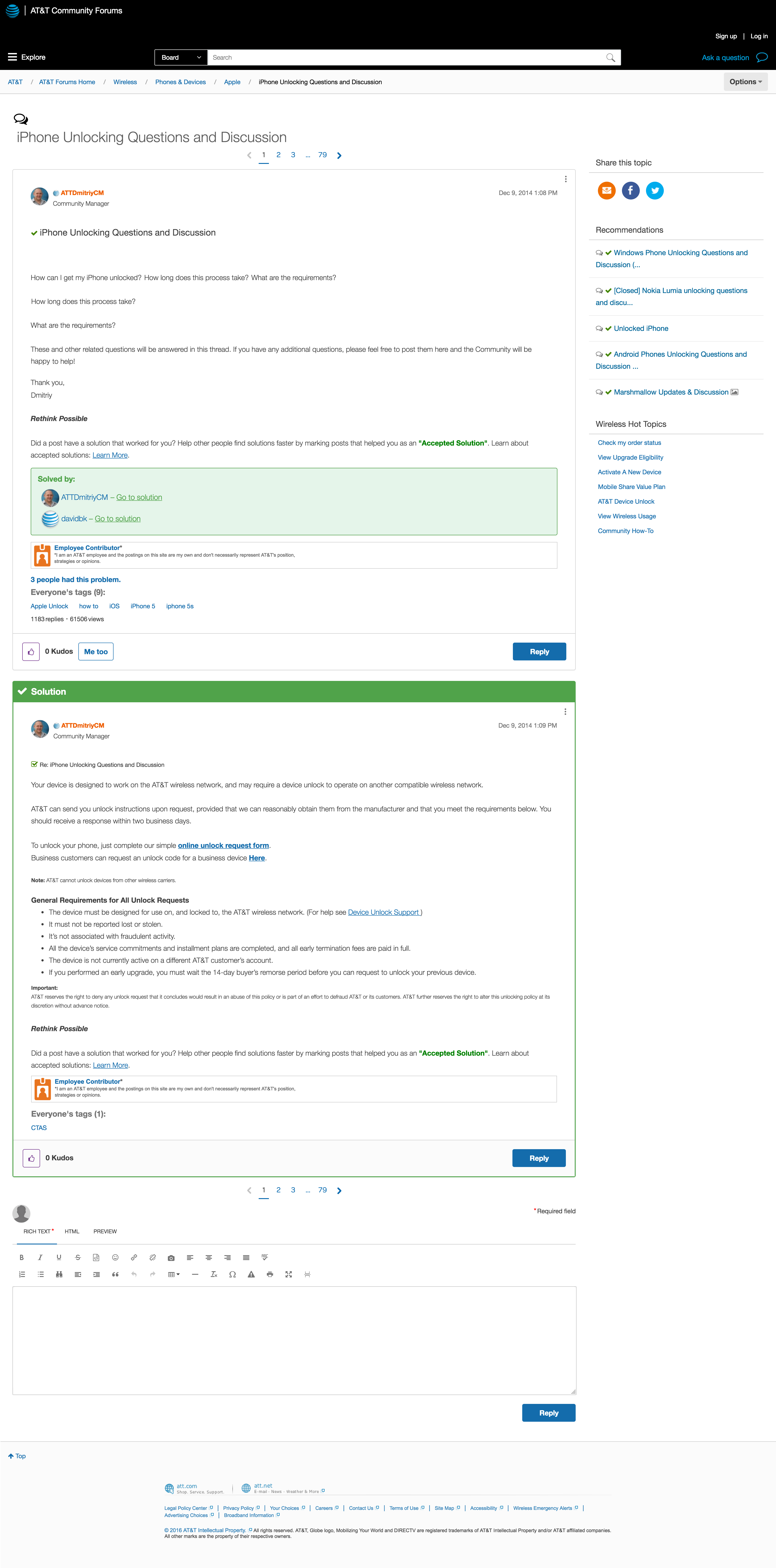
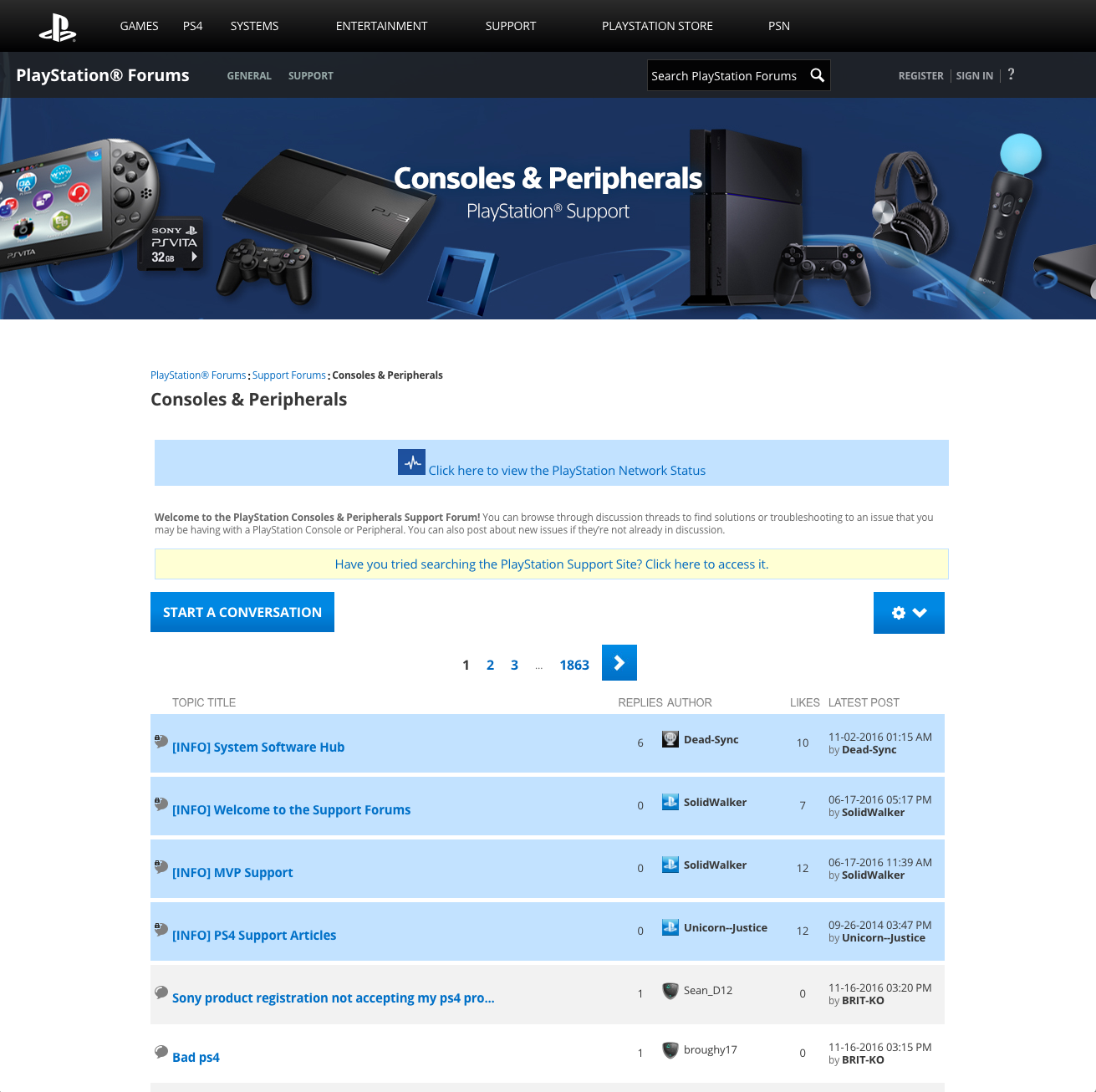
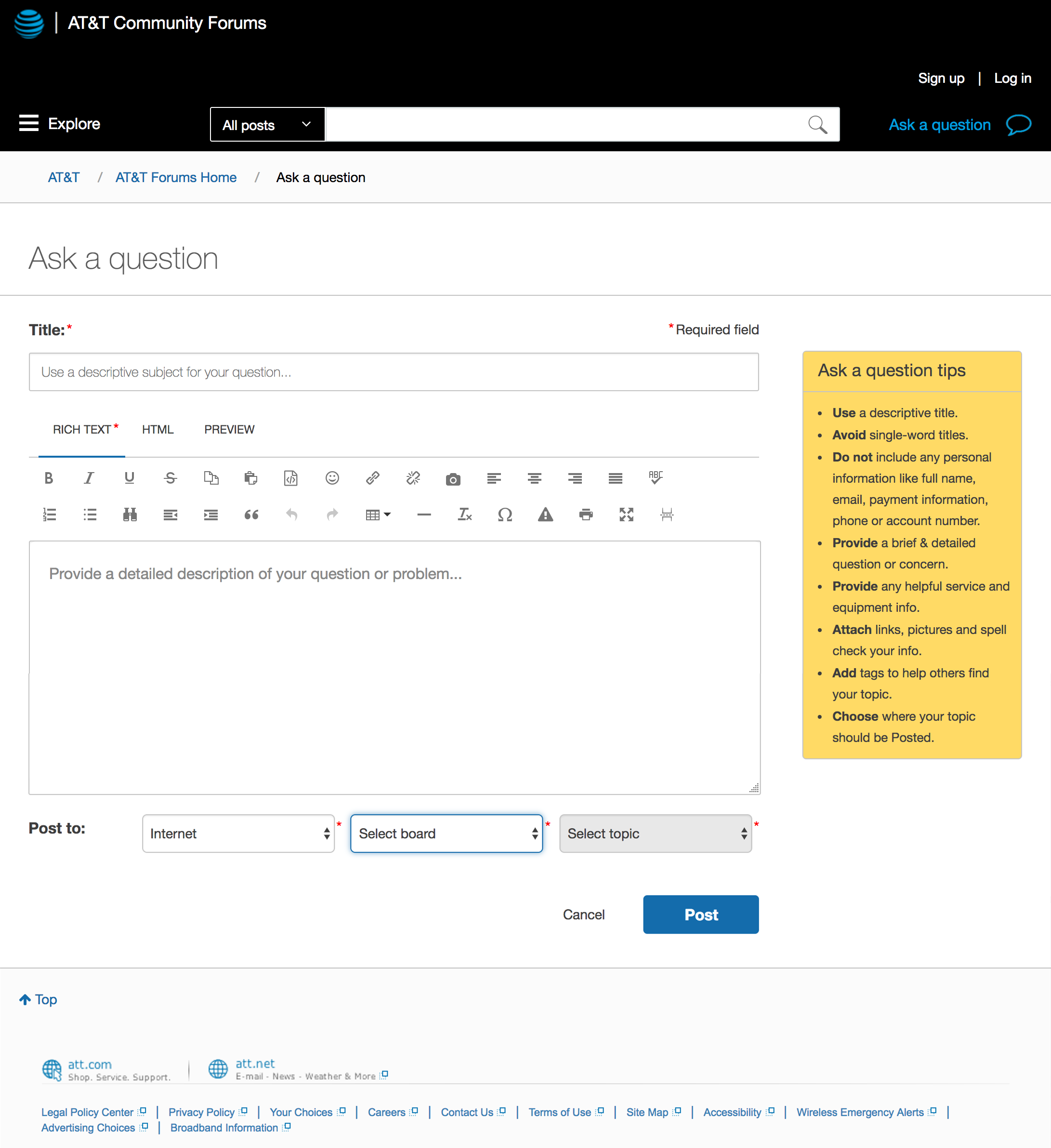
I came up with a workflow for users as they entered the support forums. They could come via a search engine like Google, or from the navigation of a company's site. Once there, they would want to search or browse for an issue that was similar to theirs or ask peers and the company to help answer their question. I worked on getting users to this point as quickly as possible since Casual Product Consumers wanted to cut down on time. For Hardcore Product Consumers, we acknowledged their desire for recognition by adding rankings and levels for actions taken on the forums (making posts, replying, answering questions, limited avatars for higher ranks, titles that went from “newbie” to “superuser,” etc.) as well as ways for others to give recognition (being able to “give Kudos,” much like giving a “like” on Facebook on a post). I created an area on the right sidebar that would present relevant posters’ questions in the event that the Hardcore Product Consumer might know the answer. My team also created a Moderator mode, which exposed more interface options so Moderators could perform more administrative tasks. One major feature based on our research was allowing the Moderator a way to mark a posting as the resolution to an issue. The design brought the answer to the top as a “pinned” post and was distinguished by color or a highly visible icon.
I experimented with various layouts and ways of presenting the UI in multiple wireframes. More high-fidelity wireframes were created to test out ways of making the user experience as seamless and easy as possible prior to building. At this time, web technologies were advancing so we tried to prototype newer ways of interacting with the user interface, but we were still limited by legacy browser usage.
Results & Response
Dell was our first customer and was using our Community Forums software in an ad hoc manner to help resolve support issues. As our team of 7 re-oriented our software platform to one that offered online support access to consumers, we were able to make Lithium a company that saved enterprise businesses millions of dollars by allowing them to reduce the need for costly call-centers. Dell, in the first 2 years had an ROI of $23 million based on an internal study they did after switching to our new platform. This led to developing a strong client base of companies (AT&T, Sony PlayStation, Nintendo, Sprint, Virgin Mobile, and Best Buy) that began to support their customers online. On the strength of this business, Lithium was able to secure $9 million in its Series A funding, and became a leader in the SaaS Social-CRM industry.
Reflection and Next Steps
During this time period, there were rapid changes in web technology. Often, after we implemented new designs, newer ways of doing things became available. We learned that we had to constantly review and iterate on our user experience as newer frameworks for interactivity evolve, yet we had to maintain a balance for users not yet on the latest web browsers. The product became a living thing. Also due to bandwidth at the time, we were only able to focus on the Customer side of the user experience. We didn’t initially get a chance to work on the analytics user interface for clients. This later would be built as the data became more abundant and useful in offering insights into user behavior.
As we transformed a common tool into one that was niche, we discovered that taking more specific paths for users could produce much more effective than a purely general one. Creating forums that were tailored to customer care and support allowed Lithium to take a leadership position in a new market. As next steps, we were better positioned to create a full platform of social-CRM products that covered the wider range of online activities where users engaged with enterprises.